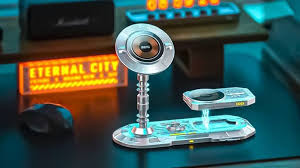
Futuristic gadgets are innovative technologies that go beyond current common use. They often feature AI, advanced connectivity, and smart automation. These devices aim to improve efficiency, comfort, and entertainment. They hint at the future of daily life and professional tasks.
The Rise of Smart Everything
Smart technology is everywhere now. It’s not just your phone. Homes are getting smarter too. Devices can talk to each other. This makes life easier. It also saves time and energy. Think about lights that turn on when you walk in. Or a fridge that tells you when you need milk. This is the start of it all. AI plays a big part here.
AI, or artificial intelligence, is like a brain for machines. It helps them learn and make choices. This makes gadgets smarter. They can understand what you say. They can even predict what you might need. This helps them work better for you. It feels almost magical sometimes. But it’s really just smart design.
The concept of a “smart home” is growing fast. It means all your devices work together. Your thermostat can learn your habits. Your security system can be checked from afar. Your music can follow you from room to room. This creates a connected living space. It’s designed for comfort and control.
Personalized AI Assistants
Voice assistants like Alexa and Google Assistant are common now. But they are getting much smarter. Future assistants will know you better. They will learn your routines. They might suggest things before you even ask. Imagine an assistant reminding you to take medicine. Or helping you plan your meals based on your health goals. That’s the power of advanced AI.
These assistants can do more than just play music. They can control your whole house. They can order groceries. They can book appointments. They can even help with homework by finding information. They are becoming like personal helpers. They make daily tasks much simpler. They free up your time for other things.
The next step is assistants that feel more human. They might understand tone of voice better. They could sense if you’re stressed. Then they could offer calming music or a suggestion for a break. This kind of emotional AI is being developed. It will make our interactions with tech feel more natural.
Smart Home Hubs: The Future’s Control Center
What they do: Connect and manage all your smart devices.
How they help: Simplify control via voice or app. Automate routines.
Future focus: Deeper AI integration for predictive actions.
Example: A hub that dims lights, adjusts temp, and locks doors at bedtime.
Wearable Technology Evolves
Smartwatches and fitness trackers are just the beginning. Wearable tech is becoming more sophisticated. Think about clothes that monitor your health. Or glasses that show you information in real-time. These devices are becoming less visible. They blend into our daily lives seamlessly.
One exciting area is health monitoring. Wearables can track your heart rate. They can count your steps. Soon, they might detect early signs of illness. Imagine a watch that alerts you to a potential heart problem. Or a patch that monitors blood sugar for diabetics. This could save many lives.
Augmented reality (AR) glasses are also on the horizon. These don’t block your view. Instead, they add digital information to what you see. You could see directions overlaid on the street. Or see product details by looking at an item. This could change how we learn and explore.
The design of wearables is also changing. They are becoming more stylish and comfortable. They are made from better materials. This makes them something people actually want to wear all the time. This constant connection allows for continuous data collection. It helps create a fuller picture of our well-being.
Smart Clothing: More Than Just Fabric
- Health Tracking: Embedded sensors monitor vitals like heart rate and breathing.
- Performance Analysis: Athletes can get real-time feedback on their form.
- Comfort Control: Some fabrics can adjust temperature based on your body.
- Connectivity: Clothes could connect to other devices to share data.
The Future of Transportation
Self-driving cars are no longer just a concept. They are being tested and slowly introduced. This technology promises safer roads. It could also change how we commute. Imagine using your travel time to work or relax. No more stress about traffic jams.
Autonomous vehicles use sensors and AI. They “see” the road. They understand traffic rules. They can react to unexpected events. This requires complex computer systems. It also needs very accurate maps.
Beyond cars, we see other transport innovations. Electric scooters and bikes are popular. They offer a green way to get around. In the future, we might see flying taxis. Drones are already delivering packages. These advancements aim to make travel faster and more efficient.
The infrastructure for these new transport modes is also changing. We need charging stations for electric vehicles. We need safe lanes for scooters. Smart traffic lights can help manage the flow of all these different vehicles. It’s a complex system working together.
Autonomous Vehicle Snapshot
Sensors: Cameras, radar, and lidar help cars “see.”
AI Brain: Software processes data and makes driving decisions.
Connectivity: Cars communicate with each other and with traffic systems.
Safety: Aims to reduce accidents caused by human error.
Robotics in Everyday Life
Robots are not just for factories anymore. They are entering our homes and workplaces. Robotic vacuums are a common example. But robots are becoming much more advanced. They can perform complex tasks.
Consider household robots. Some can clean windows. Others can help with gardening. There are even robots designed to help the elderly. They can remind people to take medicine. They can also help with simple chores. This can allow people to live independently for longer.
In the workplace, robots are also evolving. They work alongside humans. They can do repetitive or dangerous jobs. This increases safety and efficiency. Think about robots in hospitals. They can help surgeons perform delicate operations. They can also deliver supplies. This frees up human staff for patient care.
The development of dexterity is key for robots. They need to be able to handle objects with care. This is a hard problem for machines. But progress is being made. Robots are learning to grasp different items. They can adjust their grip based on the object.
Robots Helping Us
Home Help: Cleaning, cooking assistance, companion robots.
Healthcare: Surgical assistance, patient care, delivery bots.
Workplace: Manufacturing, logistics, dangerous tasks.
Key Tech: Advanced AI, better sensors, improved motor control.
Virtual and Augmented Reality
Contrast: Virtual Reality vs. Augmented Reality
Virtual Reality (VR): Creates a completely new, immersive digital world. It blocks out the real world. You wear a headset that shows you a 3D environment. It’s like being transported somewhere else entirely.
Augmented Reality (AR): Adds digital elements to the real world. You see your surroundings. But computer-generated images are overlaid on top. Think of Pokémon Go or smart glasses that show you info.
VR and AR are changing entertainment. They are also changing how we learn and work. VR can create realistic training simulations. Pilots can practice flying in a safe space. Surgeons can rehearse complex operations. This reduces risks and improves skills.
AR is becoming more useful for daily tasks. Imagine a mechanic using AR glasses. They could see repair guides overlaid on an engine. Or a shopper could see how furniture looks in their home before buying it. This makes decisions easier and more informed.
The hardware is getting better too. VR headsets are becoming lighter and more comfortable. AR glasses are getting smaller and more stylish. The graphics are also more realistic. This makes the experience more engaging and believable.
We are seeing new uses for these technologies. In education, students can explore historical sites. They can dissect virtual frogs. This makes learning more interactive. In healthcare, VR is used for pain management and therapy.
Connectivity and the Internet of Things (IoT)
The Internet of Things (IoT) is the network of devices. These devices collect and share data. This creates a more connected world. Your smart thermostat is part of IoT. So is your smart fridge. Even your car can be part of IoT.
This interconnectedness allows for amazing things. Smart cities use IoT to manage traffic. They monitor air quality. They optimize energy use. Imagine streetlights that dim when no one is around. Or trash cans that signal when they are full.
In homes, IoT makes devices work together. If your smoke detector goes off, it can turn on all your lights. It can unlock your doors. It can send an alert to your phone and the fire department. This creates a safer environment.
The challenge with IoT is security. With so many devices connected, there are more ways for them to be hacked. Companies are working hard to make these devices secure. Strong passwords and regular updates are important. Using trusted brands also helps.
IoT in Action: Quick Scan
Smart Homes: Thermostats, lights, security systems, appliances.
Cities: Traffic management, waste collection, energy grids, public safety.
Industry: Manufacturing, supply chain tracking, predictive maintenance.
Healthcare: Remote patient monitoring, smart medical devices.
The Ethics and Impact of Futuristic Gadgets
As technology advances, we face new questions. How do we protect our privacy with so much data being collected? Who is responsible if a self-driving car causes an accident? These are important ethical issues.
We need to think about the digital divide. Will everyone have access to these new gadgets? Or will some people be left behind? It’s important to ensure that technology benefits everyone. Not just a select few.
The impact on jobs is also a concern. As robots and AI become more capable, some jobs may disappear. We need to think about retraining and new career paths. The future of work will likely look very different.
It’s also important to remember the human element. Technology should help us connect. It should not isolate us. We need to find a balance. We should use these tools to enhance our lives. Not let them take over.
Looking Ahead: What’s Next?
The pace of innovation is incredible. What seems futuristic today will be normal tomorrow. We can expect even more personalized experiences. Devices will understand our needs better. They will adapt to us.
Materials science is also playing a role. New materials will make devices lighter, stronger, and more flexible. This could lead to entirely new types of gadgets.
The integration of AI will continue. It will become more sophisticated. It will power many of the innovations we see. From smarter homes to more efficient transportation.
It’s an exciting time to be alive. The potential for these futuristic gadgets is huge. They can solve big problems. They can make our lives easier and more enjoyable. But we must also use them wisely and ethically.
Frequent Questions About Futuristic Gadgets
What is the most common futuristic gadget today?
Smartphones are probably the most common. They have many advanced features. AI assistants like Alexa and Google Assistant are also very widespread.
Will robots take over all our jobs?
It’s unlikely they will take all jobs. But some jobs will change. New jobs will also be created. The focus is on robots helping humans, not replacing them entirely.
Are self-driving cars safe?
Self-driving technology is improving rapidly. The goal is to make them safer than human drivers. However, they are still being tested and refined.
How do I protect my smart home devices from hackers?
Use strong, unique passwords. Keep your device software updated. Only buy from trusted brands. Consider a separate network for your IoT devices.
What is the difference between AI and machine learning?
AI is the broad idea of making machines smart. Machine learning is a way to achieve AI. It’s how machines learn from data without being explicitly programmed.
Will virtual reality ever be as real as real life?
VR is getting very realistic. But replicating all human senses and experiences perfectly is a huge challenge. It will likely become very immersive, but “as real” is a high bar.
Conclusion
The world of futuristic gadgets is amazing. It’s changing fast. These devices offer new ways to live and work. They use AI and smart connections. They promise a more convenient future. We should embrace these changes wisely.